

It was a Tuesday in mid-March, the sort of grey, drizzly London afternoon that makes you question every life choice leading up to that moment, when I found myself wedged between a frantic mother from Surrey and a rack of tulle that smelled faintly of lavender and desperation. We were in a boutique not far from Sloane Square, and the mother—let’s call her Camilla—was hyperventilating over a hemline. "Is it too much?" she gasped, clutching a confection of satin that looked like it had been engineered by NASA. "Or is it not enough? Will Father Michael think we’re showing off? Will the PTA think we’re cheap?"
I handed her a tissue and a peppermint. "Darling," I said, channeling my inner Anna Wintour if she’d been raised on digestive biscuits and warm tea, "it’s a sacrament, not the Met Gala. But let’s make sure the lace doesn’t itch, shall we?"
This scene, dear readers, is played out annually across the British Isles. The First Holy Communion season is upon us, and with it comes a specific, peculiarly British form of anxiety. It sits right at the intersection of religious solemnity, social signaling, and the terrifying prospect of putting an eight-year-old in pristine white near a chocolate fountain.
As your resident fashion anthropologist (and someone who once tried to wear Doc Martens to her own confirmation—sorry, Mum), I am here to guide you through the etiquette, the history, and the sheer, unadulterated joy of finding the perfect dress without losing your mind.
The Sociology of the Sunday Best: A Brief History
Before we dive into the tulle, let’s put on our academic spectacles for a moment. Why do we do this? Why the white? Why the fuss?
Historically, the tradition of white Communion dresses in Britain is deeply tethered to Victorian ideals of purity and the "Angel in the House" domesticity. In the mid-19th century, as the textile industry boomed in Manchester and lace production became mechanized in Nottingham, the ability to dress a child in stark, clean white was a massive flex. It signaled that you had the means to keep clothes clean in a coal-dust-choked city. It was, quite literally, a status symbol woven into the warp and weft of the fabric.
Professor Elizabeth Wilson, in her seminal work Adorned in Dreams, reminds us that "fashion is dress in which the key feature is rapid and continual changing of styles." Yet, Communion wear is the fascinating exception. It is anti-fashion. It is a deliberate pause in the trend cycle, a nod to timelessness. When you browse through the archives of Communion dresses, you see a stubborn resistance to the mini-skirt era of the 60s or the neon excess of the 80s. The silhouette remains largely constant: the A-line, the modest bodice, the celebration of innocence.
But here is the modern twist: while the silhouette is traditional, the technology is cutting-edge. We are seeing fabrics now that repel stains (a miracle for the post-ceremony reception) and breathable linings that prevent the dreaded "itchy-scratchy" meltdown at the altar. It’s tradition, upgraded.
The Etiquette of the Ensemble: What to Wear (and What to Avoid)
So, you are standing in the digital aisles of ZOYA, scrolling through pages of ethereal beauty. How do you choose? The British approach to Communion etiquette can be summed up in one word: Appropriateness.
1. The Length Debate: Tea vs. Floor
This is the most common question I get in my inbox. "LS, must it touch the floor?" The answer is a resounding no, but with caveats.
In more traditional Catholic parishes, particularly those with a strong Irish or Italian heritage in cities like Liverpool or Glasgow, the floor-length gown is often the standard. It echoes the bridal aesthetic (the child as the "bride of Christ"), creating a sense of profound ceremony.
However, the "Tea Length" (falling mid-calf) is increasingly popular and, frankly, more practical for the British weather. It allows for a delightful display of socks and shoes—and let’s be honest, nothing ruins a solemn procession like a child tripping over a satin hem because they haven’t mastered the art of walking in a ballgown.
Is it better to be comfortable and upright, or elegant and face-down in the aisle? I think we know the answer.
2. The Sleeves: A Study in Modesty
British churches can be drafty. I recall a ceremony in a stunning Norman church in Yorkshire where I could see my own breath while singing Faith of Our Fathers. Therefore, sleeves are not just an etiquette requirement; they are a survival mechanism.
If you fall in love with a sleeveless design among the Communion dresses, etiquette dictates a bolero or a cardigan. This isn't just about covering shoulders out of respect; it’s about creating a layered look that adds texture. Imagine a crisp, sleeveless satin bodice paired with a faux-fur capelet or a delicate lace bolero. It’s practical, it’s chic, and it keeps the poor mite from turning blue.
3. The "Mini-Bride" Syndrome
We need to talk about the veil. There is a fine line between a Communion veil and a bridal train that rivals Princess Diana’s. The current British etiquette leans towards simplicity. A simple circlet of flowers (fresh or high-quality silk) with a modest tulle veil is perfection. Tiaras are acceptable, but keep them delicate. We are aiming for "cherubic innocence," not "Miss Universe contestant."
The "Bubble View": My Own Fashion Faux Pas
I must confess, my own "bubble view"—that slightly distorted, self-centered perspective we all have—was challenged recently. I was reviewing a collection of Communion dresses and found myself scoffing at a dress with sequins. "Sequins?" I sniffed. "For church? How vulgar."
Then, I saw the dress in motion. It was worn by a little girl named Maya, who was twirling in a sunbeam. The sequins weren't the garish disco discs of my nightmares; they were micro-sequins, transparent and sewn into the underlayer of the tulle. They didn't sparkle; they glowed. It looked like she was wearing a cloud that had swallowed a star.
It was a humbling reminder that fashion technology has moved on, and my snobbery needed to catch up. Modern embellishments can be subtle, magical, and entirely appropriate. It taught me that etiquette isn't about rigid rules; it's about the spirit of the occasion. If a dress makes a child feel radiant and special, isn't that the holiest thing of all?
The Guest List and The Gift: Navigating the Social Minefield
British politeness is a weapon, and nowhere is it wielded more effectively than at a Communion party.
The Invitation
Do you invite the whole class? Good heavens, no. Unless you are renting Wembley Stadium, keep it to family and close friends. The Communion is a sacrament, not a birthday party. It is intimate.
The Gift
If you are a guest, the etiquette regarding gifts has shifted. Historically, one gave a prayer book or a rosary. Today, while those are still lovely, money is increasingly acceptable, usually placed in a card. If that feels too transactional, consider a keepsake: a silver photo frame, a delicate necklace, or a premium illustrated Bible.
Does giving cash make you look lazy, or does it make you the favorite aunt? In this economy, I’d wager the latter.
The Visual Language of ZOYA: A Critique
Let’s look closely at what makes a dress work, using the curated selection from ZOYA as our case study. When I analyze these garments, I’m looking for the "hand"—the feel of the fabric—and the architectural structure.
Take, for instance, the classic satin A-line. In the photos, notice how the light hits the fabric. It’s a soft diffusion, not a harsh glare. This indicates a high-quality weave. The skirts often feature multiple layers of tulle. This isn't just for volume; it creates a depth of color. White isn't just white; it’s oyster, it’s ivory, it’s snow.
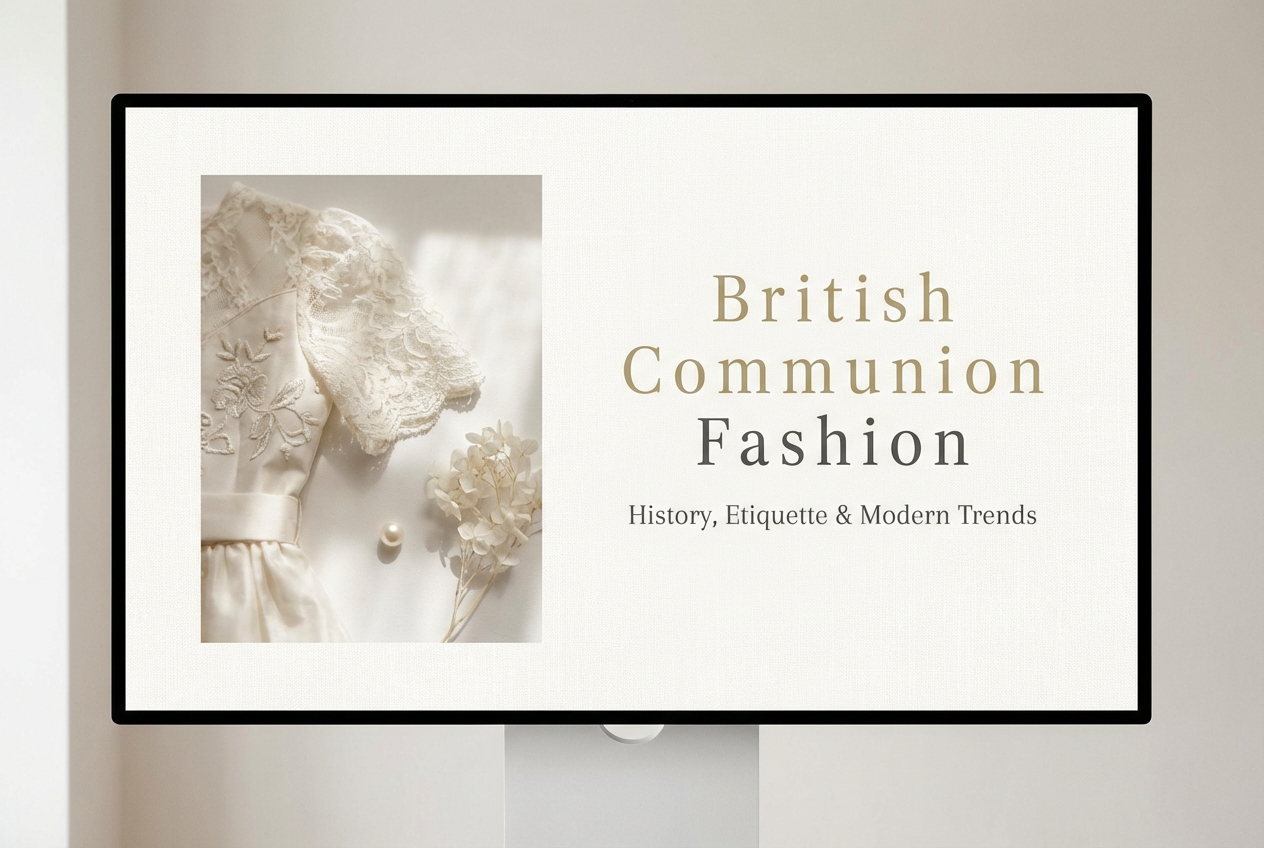
I am particularly taken with the lace detailing on the bodices of the current season's Communion dresses. We are seeing a move away from heavy, chemical lace towards softer, almost crochet-like textures that mimic vintage Irish lace. It brings a tactile, human element to the garment. It begs to be touched.
And let’s not forget the back of the dress. During the ceremony, the congregation spends an hour staring at the back of your child. Buttons! I love a row of fabric-covered buttons running down the spine. It is a detail that screams "couture" and shows that the design has been considered from 360 degrees.
Practical Tips for the Big Day (From the Trenches)
- The Pre-Church Snack: Do not, under any circumstances, feed the child Ribena or anything with tomato sauce within three hours of the ceremony. Stick to water and perhaps a colorless mint. I have seen a pristine white bodice destroyed by a rogue strawberry jam tart, and the mother’s scream still haunts my dreams.
- The Shoes: Break them in. Have your daughter wear her Communion shoes around the house with thick socks for a week beforehand. Blisters are not holy.
- The Hair: If you are doing an updo, use twice as many pins as you think you need. British humidity laughs at hairspray.
- The Change: Bring a change of clothes for the reception. Let her wear the dress for the photos and the cake cutting, then let her change into something she can run in. It preserves the dress as an heirloom and preserves her sanity.
The Future of Tradition
As we look at the landscape of British children's fashion, it is heartening to see that the tradition of the First Holy Communion remains robust. In a world that is increasingly digital, fast-paced, and transient, there is something grounding about a ritual that demands we stop, dress up, and pay attention.
The Communion dresses we choose are more than just fabric and thread. They are memory vessels. Twenty years from now, that dress will be pulled out of a box in the attic. The tulle might be a little yellowed, the satin a little creased. But it will still hold the ghost of that day: the smell of incense, the sound of hymns, the taste of the cake, and the feeling of being small, loved, and incredibly smart.
So, take a deep breath. Ignore the competitive mums at the school gate. Trust your instincts. And remember, at the end of the day, it’s just a dress. But oh, what a dress it can be.
Shop & Style: LS’s Edit for ZOYA
Ready to find "The One"? Here are my top picks from the current collection, curated for the discerning British parent who wants elegance without the fuss.
- The Modern Minimalist: For the girl who hates frills. Look for clean lines, high-quality satin, and perhaps a simple bow at the waist. It’s architectural and chic. Browse the sleekest Communion dresses here.
- The Vintage Romantic: If you love the Downton Abbey aesthetic, look for lace sleeves and soft tulle skirts. These dresses photograph beautifully in old stone churches.
- The Princess Cut: For the girl who has been dreaming of this day since she was three. Full skirts, subtle sparkle, and volume. Just ensure the hoop isn't too wide for the pew!
- The Comfort First: Look for cotton-lined bodices and soft seams. Perfect for sensitive skin or sensory issues. Fashion should never hurt.
Go forth and style, my darlings. And may your white stay white until at least after the blessing.
Yours in tulle and tea,
LS
You might also like these related articles:
1. First Holy Communion: A Guide to Choosing the Perfect Dress
💡 This article directly complements the current topic by providing a broader guide on selecting the perfect dress, reinforcing the practical advice given in the etiquette guide.
2. First Communion Dress Trends for 2024: What's In Style?
💡 Since the current article touches on modern trends in Communion dresses, this piece offers a specific look at the latest styles for the 2024 season.
3. Choosing the Right Accessories for a First Communion Dress
💡 The current article mentions accessories as part of the etiquette; this related post dives deeper into selecting the specific items like veils, gloves, and shoes.
4. How to Measure Your Child for a First Communion Dress
💡 Practical advice on sizing is crucial for dress selection mentioned in the main article, ensuring the chosen dress fits according to the discussed etiquette standards.
5. Traditional vs. Modern First Communion Dresses: Finding the Balance
💡 This article explores the tension between history and modern trends, which is a central theme of the current guide on British etiquette and fashion history.