

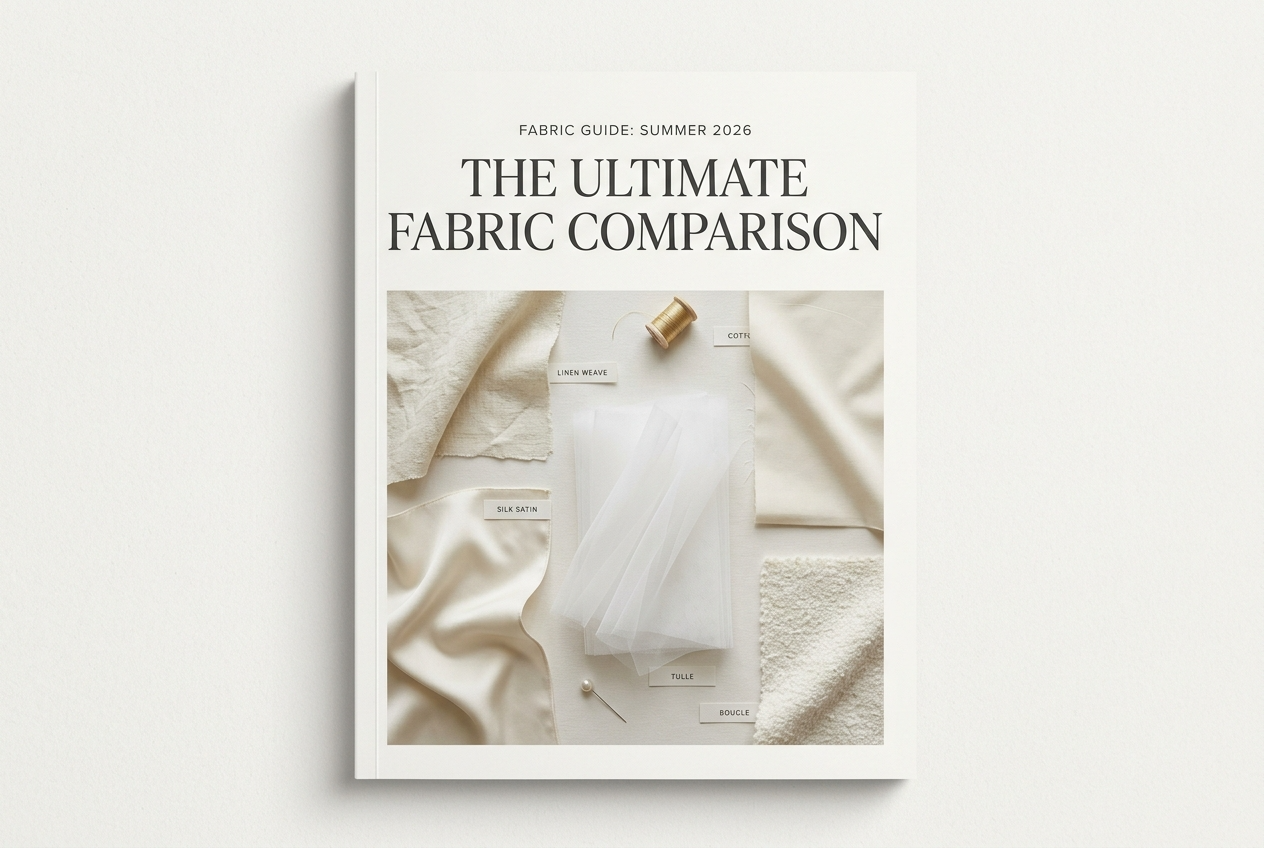
Flower Girl Dress Fabrics for Summer 2026 Weddings: A Parent's Expert Guide
Here is what you need to know:
- The fabric of your flower girl dress determines comfort, appearance and how well it holds up through a long wedding day
- Lightweight natural fibres like cotton and linen are ideal for summer, while tulle and organza create that classic fairytale silhouette
- Understanding fabric properties helps you make a confident choice that keeps your daughter happy from ceremony to last dance
I remember standing in a shop three years ago, running my fingers across a rail of children's occasion dresses, and realising I had absolutely no idea what I was touching. Satin? Polyester? Something called dupioni? It all looked lovely on the hanger, but which one would keep my daughter comfortable at a July wedding in 30-degree heat?
If you have ever felt the same quiet confusion, you are not alone. Fabric is the single most important factor in how a flower girl dress looks, feels, and performs on the day. Yet it is the one thing most parents overlook when choosing an outfit. Let us change that.
Why Fabric Choice Matters More Than You Think
When it comes to children's occasion wear, fabric is not just a technical detail. It affects everything: how the dress drapes, how it photographs, how hot or cool your child feels, and whether she can sit, walk, and twirl without discomfort.
Children are far more sensitive to texture than adults. A fabric that feels perfectly fine to your fingers might feel scratchy, stiff, or unbearably warm to a five-year-old who is wearing it for six hours straight. Summer weddings amplify this tenfold. The combination of warm weather, nerves, and physical activity means your fabric choice can make or break the experience.
The good news is that once you understand the basics, choosing becomes surprisingly straightforward. Here is a breakdown of the most common fabrics used in flower girl dresses and exactly what to expect from each.
Cotton: The Reliable All-Rounder
Cotton is the fabric most parents instinctively trust, and with good reason. It is breathable, soft against the skin, easy to wash, and naturally hypoallergenic. For summer weddings, a cotton-based flower girl dress is one of the safest choices you can make.
Pros: Excellent breathability means your child stays cool. It absorbs moisture well, so perspiration is less of an issue. Cotton is also relatively easy to care for, which matters when you are dealing with grass stains and spilled squash at the reception.
Cons: Pure cotton can crease easily, and it does not have the same luxurious drape as satin or silk. It tends to look more casual, which may not suit very formal weddings.
Best for: Garden parties, barn weddings, outdoor ceremonies, and any summer wedding where comfort is the top priority.
Expert tip: Look for cotton blended with a small percentage of elastane or polyester. This gives you the breathability of cotton with added stretch and crease resistance.
Tulle: The Fairytale Favourite
Tulle is the fabric that makes little girls gasp. Those floating, layered skirts that billow when she twirls? That is tulle at work. It is a lightweight net fabric, usually made from nylon or polyester, and it creates volume without adding much weight.
Pros: Incredibly lightweight and airy, tulle creates that dreamy, princess-like silhouette that photographs beautifully. Multiple layers add fullness without heaviness, which is perfect for warm days.
Cons: Tulle can feel scratchy if it sits directly against the skin. Lower-quality tulle is stiffer and more irritating. It is also prone to snagging on jewellery, rough surfaces, and enthusiastic small children.
Best for: Traditional and romantic weddings. Tulle works brilliantly as an overlay on a cotton or satin lining, giving you the best of both worlds.
Expert tip: Always check what sits underneath the tulle. A good flower girl dress will have a soft cotton or jersey lining between the tulle and your child's skin. This is non-negotiable for comfort.
Satin: Elegant But Worth Considering Carefully
Satin has a beautiful, luminous finish that catches the light and looks stunning in photographs. It is a popular choice for formal weddings and cathedral ceremonies. However, satin is not always the best friend of a warm summer day.
Pros: The smooth, glossy surface looks incredibly polished. Satin drapes elegantly and resists wrinkling better than cotton. It gives any dress an instant sense of occasion.
Cons: Most satin used in children's wear is polyester-based, which means it does not breathe well. On a warm day, this can lead to overheating and discomfort. Satin also shows every mark, from water spots to small fingers covered in wedding cake icing.
Best for: Autumn and winter weddings, or indoor summer ceremonies with air conditioning. If your heart is set on satin for a summer wedding, look for a dress that uses it as a bodice fabric only, with a lighter skirt.
Expert tip: Duchess satin is heavier and more structured, while charmeuse satin is lighter and softer. For summer, charmeuse is the better option if satin is a must.
Organza: Light as Air, Crisp as Morning
Organza is similar to tulle in that it is a sheer, lightweight fabric, but it has a crisper, more structured feel. It holds its shape better than tulle and creates a more tailored, polished look rather than a soft, flowing one.
Pros: Very lightweight and allows air to circulate. Organza has a subtle sheen that photographs well without being as flashy as satin. It resists creasing better than many fabrics.
Cons: Like tulle, organza can feel rough against sensitive skin if there is no lining. It is also more fragile and prone to tearing if caught on something sharp.
Best for: Elegant outdoor weddings where you want something more refined than cotton but lighter than satin. Organza works particularly well for structured bodices and overlay skirts.
Linen: The Understated Summer Champion
Linen has had a remarkable comeback in children's fashion, and for good reason. It is one of the most breathable fabrics available, making it ideal for the warmest summer weddings.
Pros: Outstanding breathability and moisture-wicking properties. Linen gets softer with every wash and has a relaxed, effortlessly chic look. It is also a sustainable choice, which matters to many families in 2026.
Cons: Linen wrinkles. A lot. If you are expecting a perfectly pressed look throughout the day, linen may test your patience. It also tends to have a more casual aesthetic.
Best for: Bohemian weddings, beach ceremonies, Mediterranean-themed celebrations, and any relaxed summer event. A linen flower girl dress pairs beautifully with wildflower crowns and bare feet on the grass.
Expert tip: Embrace the creases. They are part of linen's charm. If wrinkles bother you, look for linen-cotton blends that offer better crease recovery while keeping the breathable qualities.
Fabric Blends: The Smart Compromise
Many of the best flower girl dresses use fabric blends rather than single fibres. This is not a shortcut or a compromise. It is smart design. A cotton-polyester blend, for instance, gives you the breathability of cotton with the crease resistance and colour retention of polyester.
Common blends you will encounter include cotton-polyester for everyday comfort and durability, cotton-elastane for stretch and ease of movement, polyester-tulle layered over cotton lining for beauty and comfort combined, and linen-cotton for breathability with slightly less wrinkling.
When reading fabric labels, pay attention to the percentages. A dress that is 80% cotton and 20% polyester will behave very differently from one that is 20% cotton and 80% polyester.
Making Your Final Decision: A Practical Framework
Choosing the right fabric comes down to three questions. First, what is the weather forecast for the wedding day and venue? For outdoor summer weddings, prioritise breathability. Cotton, linen, and tulle over cotton lining are your best options. For indoor or cooler events, satin and heavier fabrics become viable.
Second, how sensitive is your child's skin? If she has eczema, sensory sensitivities, or simply dislikes anything scratchy, cotton and jersey are the safest choices. Always check the lining, not just the outer fabric.
Third, what level of formality does the wedding call for? A grand hotel reception calls for satin or organza. A garden party is perfect for cotton or linen. Match the fabric to the setting and you cannot go wrong.
Your Summer 2026 Flower Girl Fabric at a Glance
| Fabric | Breathability | Formality | Care | Best Season |
|---|---|---|---|---|
| Cotton | Excellent | Casual to mid | Easy wash | Spring/Summer |
| Tulle | Very good | Mid to formal | Gentle care | All year |
| Satin | Poor | Formal | Spot clean | Autumn/Winter |
| Organza | Good | Mid to formal | Delicate | Spring/Summer |
| Linen | Excellent | Casual | Easy wash | Summer |
The perfect flower girl dress starts with the right fabric. Explore our collection of beautifully crafted dresses designed with comfort and quality at their core, so your daughter can enjoy every moment of the celebration without a single complaint about her outfit.
You might also enjoy these articles: