

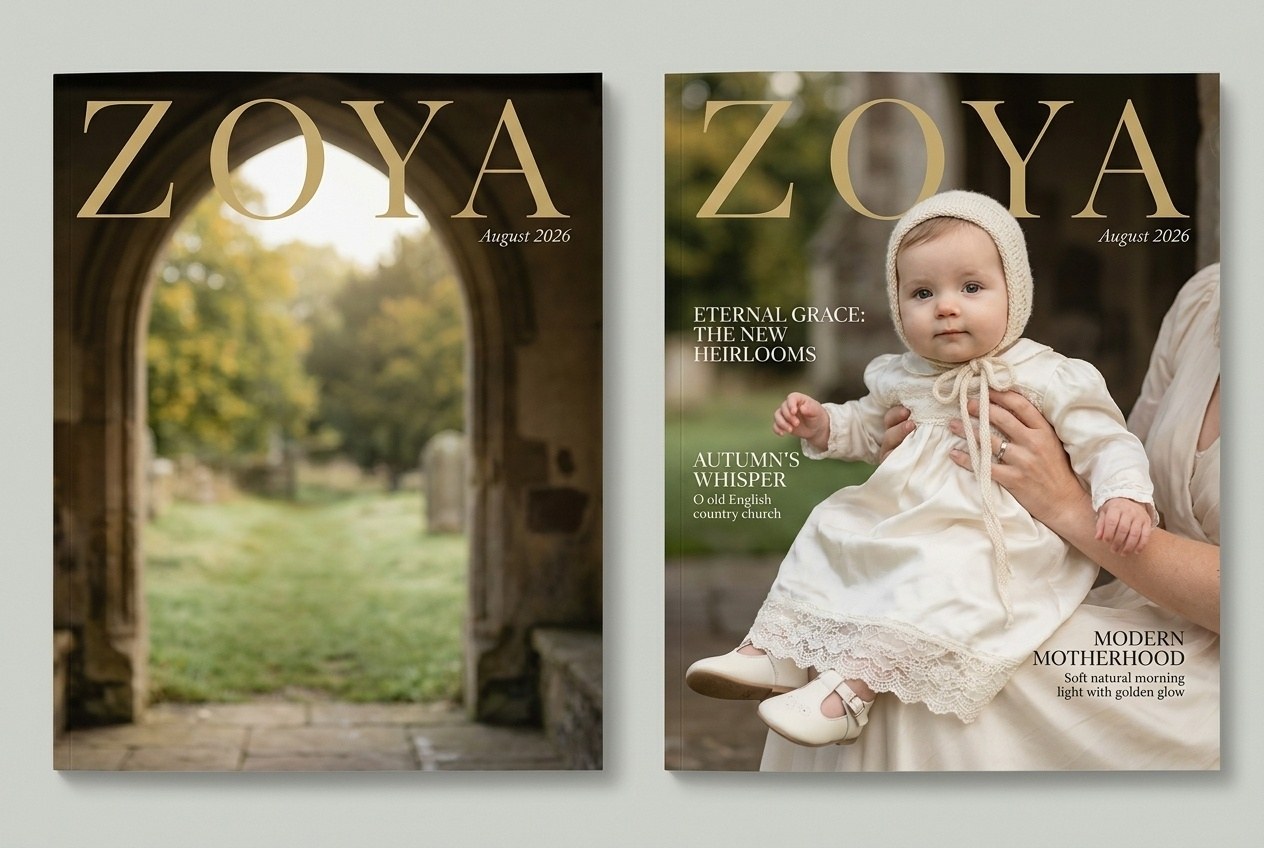
Little Girls' Shoes for an Early-Autumn Christening: Sizing by Months, Soles and Honest Cost Per Wear
It was the last Sunday in August, ten past nine in the morning, and I was crouched on a damp church path in Hertfordshire trying to persuade a nine-month-old that her sandal was, in fact, still on her foot. It wasn't. It was in the yew hedge. Her cousin, three and a half, had already soaked both socks in the dew on the grass verge where the photographer wanted everyone standing. I had a changing bag with two muslins, a rice cake and no spare footwear whatsoever, and I remember thinking that of all the things I had planned to the minute that morning, little girls' shoes were the one I had left entirely to chance. Since then I have treated autumn occasion footwear the way I treat everything else in my working life: with a tape measure, a spreadsheet and a healthy suspicion of my own guesswork.
TL;DR
- Measure, don't guess. Under two, feet change every six to eight weeks, so a size that fitted at the summer wedding almost certainly won't fit at a late-September christening. Measure the foot in centimetres, in the afternoon, with the sock she'll actually wear.
- Match the sole to the walking stage, not the age on the box. Pre-walkers need bendy, weightless soft soles; confident toddlers on a polished church floor need a firmer sole with real grip and a proper heel counter.
- Do the cost-per-wear sum before you fall for the patent. A £38 pair worn four times is worse value than a £22 pair worn twelve, and a shoe that rubs has an infinite cost per wear, because it gets worn precisely once.
Measure in Months, Not Guesses: Sizing Little Girls' Shoes Before the Church Door
The single most useful thing I have learned about buying little girls' shoes is that age on a label is marketing, and length in centimetres is fact. Two babies born the same week can be a size and a half apart, and the same baby can move a whole size in the eight weeks between a summer birthday and a harvest-season christening.
How often to re-measure
Use months as your diary reminder, not the date you last bought shoes:
- Birth to 18 months: every six to eight weeks
- 18 months to 3 years: every eight to ten weeks
- 3 to 5 years: every twelve to sixteen weeks
If you bought shoes for a July wedding and the christening is in late September, that is a full growth window. Re-measure. It takes four minutes.
The four-minute kitchen method
Stand her on a sheet of A4 against a skirting board, heel touching the wall, and mark the tip of her longest toe. Do it late in the day, when feet are at their largest, and do both feet, because most of us have one that runs bigger. Measure heel to mark in centimetres, then add 12 to 14 millimetres of growing room, which is roughly a grown-up thumb's width. That is the internal length you want. Resist the urge to add more: an over-long shoe trips a new walker on a church step far more reliably than a snug one pinches.
Width matters too, and it is the thing online shopping most often gets wrong. British children's shoes are commonly fitted in widths from E through to H, and babies in particular tend to have plump, high-instep feet that need the extra room. If a shoe is the right length but the strap is on its last hole, the width is wrong, not the size.
| Typical age | Foot length | Usual UK size |
|---|---|---|
| 0 to 3 months | 8.5 to 9.5 cm | UK 0 to 1 |
| 3 to 6 months | 9.5 to 10.5 cm | UK 1 to 2 |
| 6 to 9 months | 10.5 to 11.5 cm | UK 2 to 3 |
| 9 to 12 months | 11.5 to 12.5 cm | UK 3 to 4 |
| 12 to 18 months | 12.5 to 13.5 cm | UK 4 to 5 |
| 18 to 24 months | 13.5 to 14.5 cm | UK 5 to 6 |
| 2 to 3 years | 14.5 to 15.5 cm | UK 6 to 7 |
Treat that as a starting point, not a promise. When you browse little girls' shoes for special occasions, check the stated insole length against your measurement plus growing room, and order the pair that matches the centimetres rather than the birthday.
Soft Soles or Firm Patent? Match the Shoe to the Walking Stage
The prettiest shoe in the basket is not automatically the right one, and the deciding factor is not her age but what her feet are currently doing.
The pram stage
A baby who is not yet standing needs almost nothing from a shoe except warmth, and nothing at all in the way of support. Look for soft leather or textile soles that bend into a curl in your hand, a weight so light you barely notice it, and an elasticated ankle or a wide riptape opening that goes on over a wriggling foot in one movement. Anything stiff is dead weight, and a stiff shoe on a baby who is being carried down the aisle is simply an ornament that falls off.
The cruiser and the brand-new walker
This is the trickiest stage and the one most often over-shod. She needs to feel the floor to balance, so flexibility still wins, but she also needs grip, because the nave of a Victorian church is polished stone and she will be practising on it. Look for a thin, textured rubber outsole, a lightly padded ankle and a firm heel cup that holds the foot straight.
The confident toddler
From about two, a firmer construction earns its place. This is where classic patent T-bars and Mary Janes come into their own: they hold shape through a long day, they photograph beautifully, and they survive a lawn, a gravel path and a village hall floor. Patent is also, frankly, the most forgiving finish there is, because a smear of buttercream wipes off with a damp muslin.
Whatever the stage, run the three-point test before it goes near a church: bend the shoe at the ball of the foot (it should flex there and nowhere else), twist it gently (a little give is right, a corkscrew is not), and press the heel counter between finger and thumb (it should resist). Two minutes at the kitchen table saves an hour of carrying a grumpy child.
From Sandals to Closed and Lined: The September Changeover
The August bank holiday is my line in the sand. Before it, sandals. After it, closed shoes. It is arbitrary, but it works, because the weather turns before the calendar admits it and every autumn occasion in this country involves standing on wet grass at some point.
The timing also sits neatly with the rest of family life. Schools in Scotland went back in the middle of August; in England, Wales and Northern Ireland the first day of term lands in the opening days of September, and the annual pilgrimage to have feet measured for school shoes is already in the diary. Measure the little one at the same appointment, even if she is nowhere near school age. You are in the shop anyway.
What changes in an autumn shoe
- Closed toe and closed heel. Christening photographs happen outside, on dewy grass, at nine in the morning. Open toes turn into cold, wet toes within four minutes.
- A proper lining. Leather or brushed textile linings absorb moisture and stop rubbing far better than bare synthetic. Run a finger round the inside seam at the toe; if you can feel a ridge, so can she.
- Room for socks or tights. A pair of fine cotton tights adds two to three millimetres of bulk, and a ribbed winter sock can add five. Always measure with the hosiery she will actually wear on the day.
- A closure you can manage one-handed. Riptape is the fastest and the most adjustable over a chubby instep. A buckled T-bar is the most secure and the smartest in pictures, but allow an extra minute in the morning. Pull-on booties are wonderful in the pram and useless the moment she walks.
For a family photo session there is one more consideration that nobody warns you about: colour. Bright optic white can flare against an autumn palette of rust, sage and cream, whereas ivory, blush and soft champagne sit far more kindly next to golden light and turning leaves. If you are choosing closed occasion shoes for autumn to go with a christening gown, hold the shoe against the fabric in daylight before you commit, not under a kitchen bulb.
The Honest Cost-Per-Wear Maths Across the Price Range
Here is the sum I wish someone had shown me before that Hertfordshire christening. Cost per wear is simply price divided by the number of times the shoe is genuinely worn, and for babies that second number is brutally small, because the shoe is outgrown long before it is worn out.
| Price band | Realistic wears, 6 to 12 months | Cost per wear | Life after her |
|---|---|---|---|
| Under £15 | 4 to 6 | £2.50 to £3.75 | Linings often go first; rarely worth passing on |
| £15 to £25 | 6 to 12 | £1.50 to £4.00 | Usually good for a sibling or a resale |
| £25 to £40 | 8 to 15 | £1.70 to £5.00 | Holds shape; genuinely re-wearable |
| Over £40 | 8 to 15 | £2.70 upwards | Only sensible with two or more children |
Three things that sum has taught me. First, buy at the start of a growth window rather than the end: a pair bought the week after a measurement gives you eight to ten weeks of proper fit, whereas the same pair bought six weeks later gives you two. Second, count the actual diary entries between now and Christmas. A christening, a September wedding, a nursery photograph and a family lunch is four outings, and four outings does not justify a forty-pound shoe on a baby who will have moved two sizes by the carol service. A three-year-old wearing the same pair to a wedding, a school photo, a birthday party and Christmas Day is a completely different calculation.
Third, and least intuitive, comfort is a financial argument. A shoe that rubs gets worn once and then quietly avoided, which makes its true cost per wear the full purchase price. That is the most expensive shoe in the house. Compare a shortlist from the baby and toddler shoe range on fit and lining first, and let price break the tie afterwards rather than lead the decision.
Your September Checklist, and Where to Start
Pin this to the fridge next to the school term dates.
- Measure both feet in centimetres, late in the day, in the socks or tights she will wear
- Add 12 to 14 millimetres of growing room, no more
- Check the width, not just the length, by looking at where the strap sits
- Match the sole to the walking stage: bendy for pram and cruiser, firmer with grip for a confident toddler
- Run the flex, twist and heel-counter test at home
- Choose closed and lined for damp churchyards and early-morning photographs
- Hold the colour against the outfit in daylight, and favour ivory over optic white
- Divide the price by the number of real events in the diary before you press buy
- Wear them indoors for two short sessions before the day itself
None of this is complicated, and none of it takes longer than a cup of tea going cold. It simply moves the decision from the church path at ten past nine to the kitchen table a fortnight earlier, which is the only difference between a calm morning and a sandal in a yew hedge. Autumn in Britain gives us a beautiful run of occasions between now and Advent, and small feet deserve to enjoy every one of them without a single blister.
Ready to get it sorted before the christening invitations land? Take four minutes with a tape measure this evening, then browse the full collection of little girls' shoes at ZOYA and order by centimetres rather than by hope. Your future self, crouching on a damp church path with a camera pointed at her, will thank you.
Read also:
- Which Shoes to Wear with Girls’ Dresses – Complete Styling Guide
- Keep Girls Warm in Style: Smart Dress Layering Tips for Autumn 2024
- Styling guide for layering children's tulle dresses for cold British weddings
- Guide to choosing boleros and cardigans for UK First Holy Communions
- Stylish and Practical Girls’ Hairstyles – Best Hair Accessories for Every Occasion